Camping
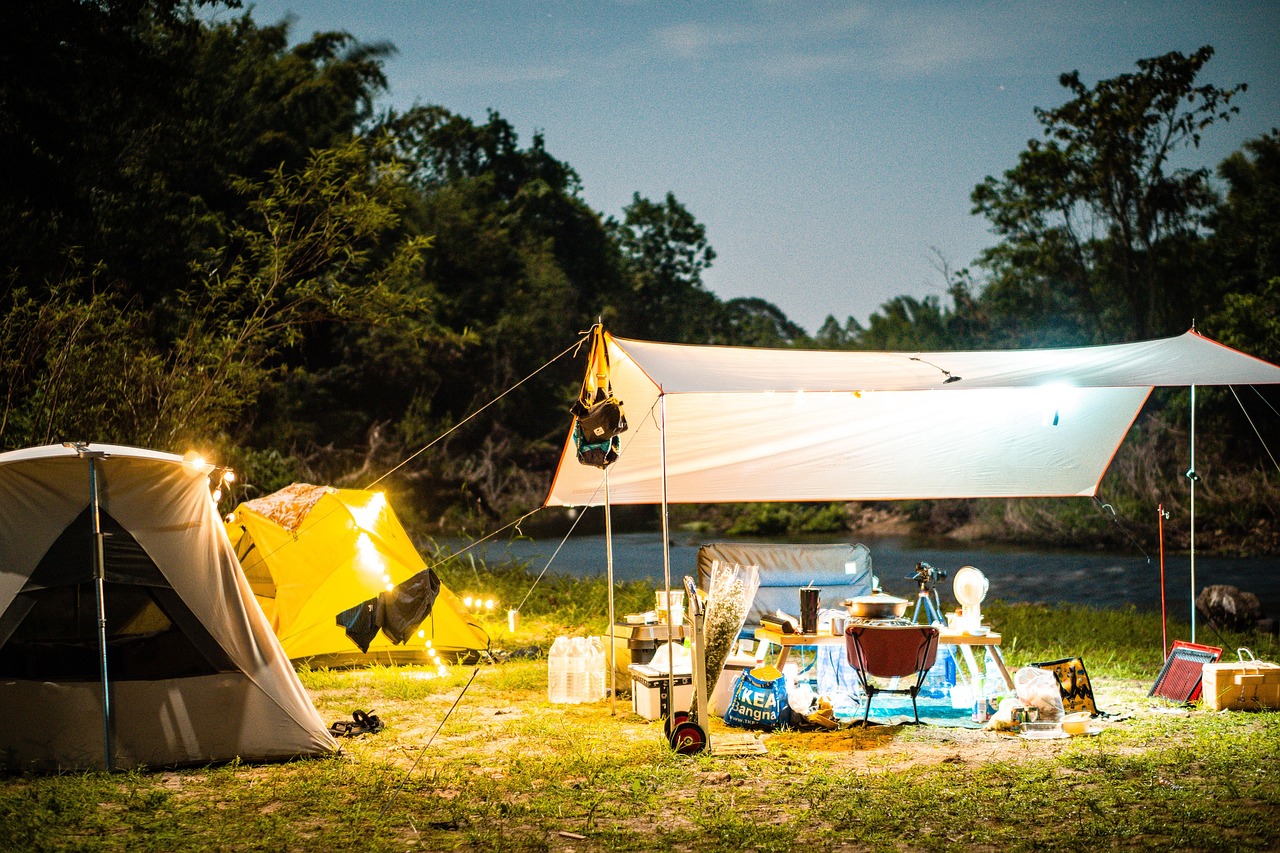
There is a reason old-time woodsmen carried canvas. It does not crackle in the wind, it does not melt when a spark lands on it, and it breathes in a way that synthetic fabrics simply do not. The trade-off is weight, and the weight is real. But if you are traveling by canoe or setting up a base camp for a week, a canvas tarp is worth every ounce, provided you pitch it correctly. Pitch it wrong and you will spend the night watching drips travel down the underside of the fabric and onto your sleeping bag.
The first thing to understand is that canvas is not waterproof in the way a plastic sheet is. It is water-resistant, and it relies on two tricks: fibers swelling when wet to close the weave, and a steep enough pitch that water never has time to pool. A canvas tarp laid flat or at a shallow angle will leak. A canvas tarp pitched steeply, with the fabric under tension, will shed a downpour for hours.
The classic A-frame is the best all-around canvas shelter, but most people pitch it too low and too shallow. A good A-frame has a ridge line at least waist-high at the center and sides that come down at roughly forty-five degrees. Run your ridge line between two trees, or between two upright poles if you are in the open. Lay the tarp over the ridge and stake the corners out wide and low, pulling until the fabric is taut enough to drum when you tap it.
The critical detail is the drip line. Water running down the underside of a canvas tarp will follow the fabric until it finds a low point, and that low point is usually right above your head. To break the drip, tie a short length of cord around the fabric at each corner and let it hang below the tarp. Water will run down the cord and drip to the ground instead of onto you. This is an old trick and it works.
Another detail: never let the tarp touch your bedding. If the fabric brushes your sleeping bag, moisture will wick straight through. Keep a hand's width of air between the tarp and everything under it.
New canvas tarps often come with a factory treatment, but it wears off. Re-treat yours once a year with a canvas wax or a linseed-oil-based dressing, applied thin and worked into the weave with a rag. Do this on a warm day and let it cure in the sun. Never fold a canvas tarp wet. If you must pack it damp, hang it to dry the moment you get home, because mildew will rot the fibers faster than any amount of rain.
Repairs are simple. A tear can be sewn with a heavy needle and waxed thread, then patched over with a scrap of canvas and contact cement. A grommet that pulls out can be replaced with a sewn loop of cord. This repairability is the quiet argument for canvas over nylon: a synthetic tarp with a ripped grommet is often a lost cause, while a canvas tarp can be kept alive for a decade or more.
Set up your canvas shelter in the yard before you trust it in the woods. Pitch it, hose it down, and watch where the water goes. Adjust your pitch until nothing drips inside. That single afternoon of practice will teach you more than any article, and it will make the difference between a wet night and a dry one.
