Camping
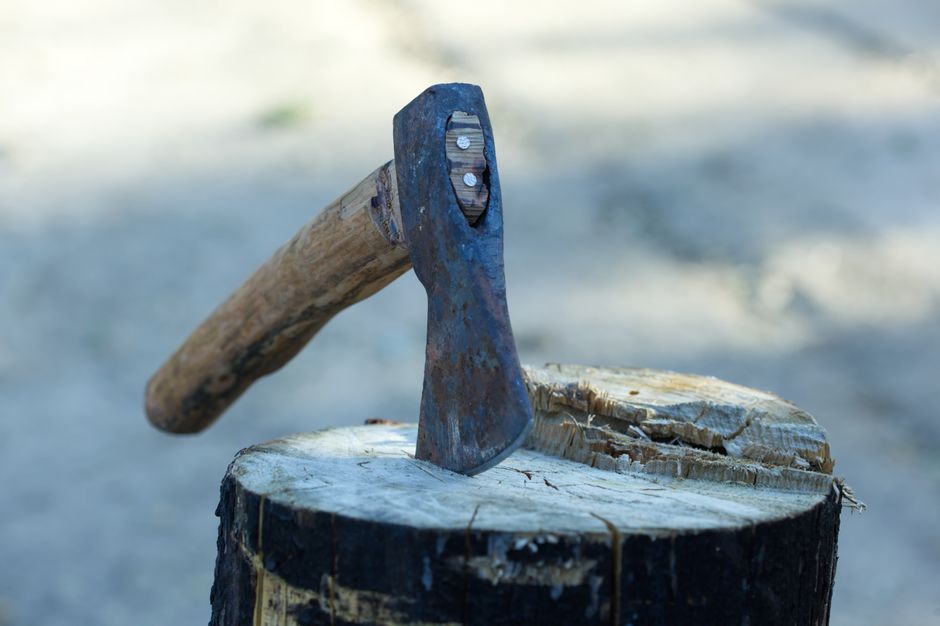
There is a particular sound a good carving axe makes when it bites into green birch — a soft, satisfying thock rather than a hollow clang. If you have spent any time around a campfire watching someone shape a spoon from a split log, you already know the sound I mean. What you may not know is how to find an axe that makes that sound in your own hands, because the axe that suits a six-foot paddler with meaty palms is not the axe that suits someone with slender wrists who mostly carves by lantern light.
Most beginners make the same mistake: they buy the biggest, prettiest axe they can afford. A full-size felling axe is a wonderful tool, but it is a terrible carving companion. It is heavy on the belt, awkward in close work, and the long handle forces your grip far from the edge where fine control lives. For spoons, kuksas, tent pegs, and fire-lighting feather sticks, you want something in the one-to-one-and-a-half-pound range with a handle short enough that you can choke up right behind the head.
The first thing to examine is the grind. Carving axes typically have a flatter, more acute bevel than a felling axe, often with a slight convexity that adds strength without sacrificing bite. Run your thumb carefully along the cheek — you should feel a smooth transition, not a shoulder that catches. A thick, blunt grind will bounce off hardwood and frustrate you within an afternoon.
The second thing is the handle. Look for straight grain running the length of the haft. Runout — where the grain dives off the side — is where handles break. A slight curve toward the head, sometimes called a fawn's foot, gives your fingers room to wrap without your knuckles grazing the wood you are shaping. If the handle is varnished, sand it back and treat it with boiled linseed oil. Varnish raises blisters; oil lets the wood breathe and your hand slide.
Third, consider the eye and the hang. A wooden wedge set across the grain, plus a metal or wooden cross wedge, holds a head securely when done well. Give the head a firm tug. Any wobble is a dealbreaker, whether you are buying new or rescuing an old head from a flea market bin.
Once you have an axe, resist the urge to start on a spoon blank. Spend your first hours on scrap firewood, practicing the three strokes that do most of the work: the chest-high chop for removing bulk, the lap chop for controlled stops, and the push cut, where you rest the blade on the wood and drive it with your palm rather than a swing. The push cut is where real carving begins, and it is nearly impossible with a heavy, long-handled axe.
Work with green wood when you can. Fresh-cut birch, alder, and willow carve like soft cheese compared to seasoned oak, and they are far kinder to a beginner's edge geometry. If you must use dry wood, choose basswood or butternut, and keep your strokes shallow.
Finally, sharpen often. A carving axe that will shave arm hair makes clean, predictable cuts; a dull one makes you push harder, and pushing harder is how beginners cut themselves. A small puck stone and a strop loaded with green compound will keep you working all weekend. Your first spoon will be ugly. Your tenth will surprise you, and by then the axe will feel less like a tool and more like an extension of your own arm.
